Coming to Wholeness
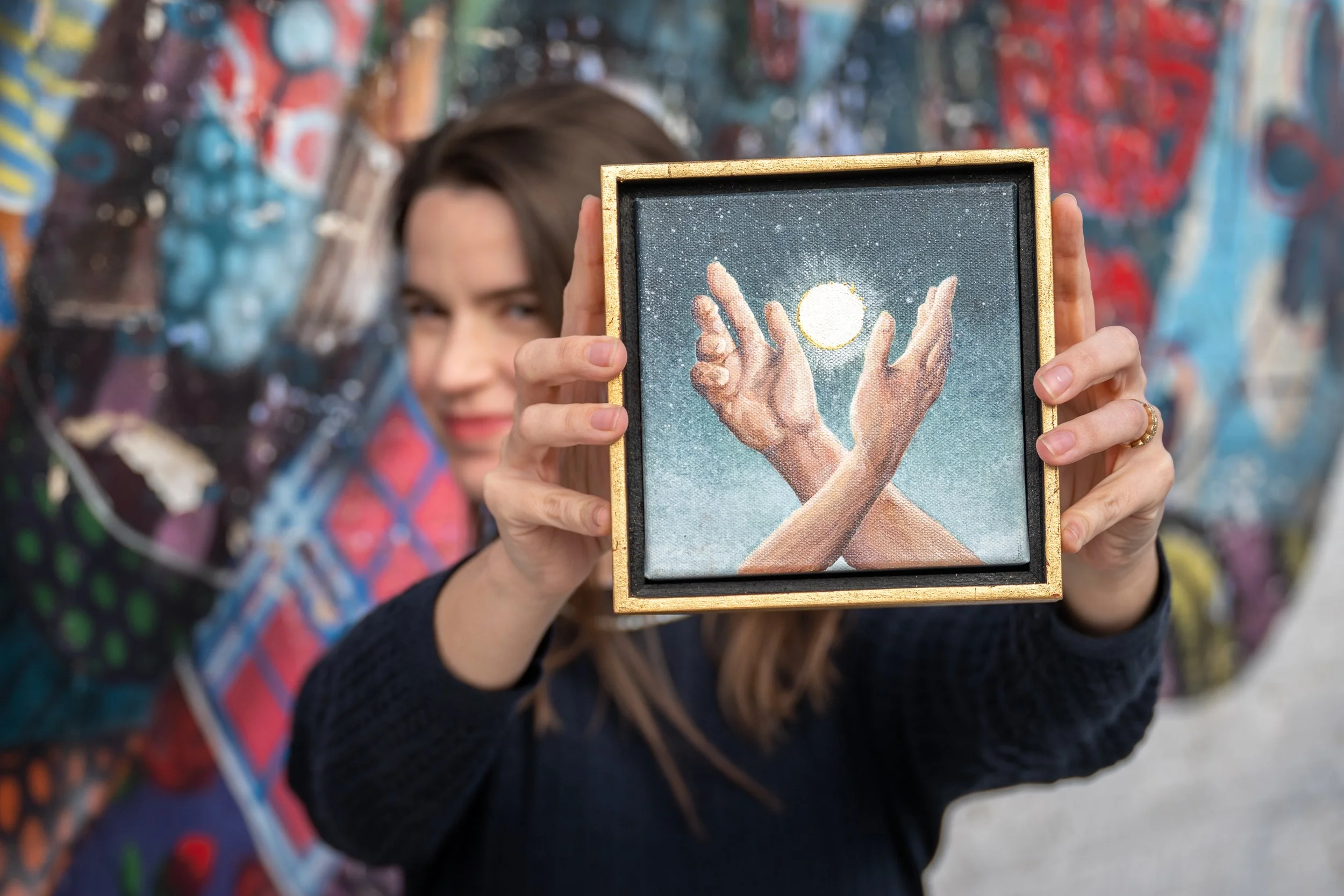
Artist, Elizabeth Bishop Wheatley
We all want to be resilient and strong in the face of any challenge, but what do we do when our own definition of resilience comes face to face with our very real, often incredibly deep insecurities and brokenness?
I had a chance to visit with artist Elizabeth Bishop Wheatley last week whom I met at Made With Love, a local pop-up market in Provo, Utah. I was intrigued by Elizabeth’s work and pleased by the friendly willingness she offered when I asked if she’d be interested in collaborating on this post.
During our visit, she talked about what makes her work come to life, and she taught me that we can channel life’s challenges into creative pieces of all kinds, bringing healing not only to ourselves, but to those who take part and witness it.
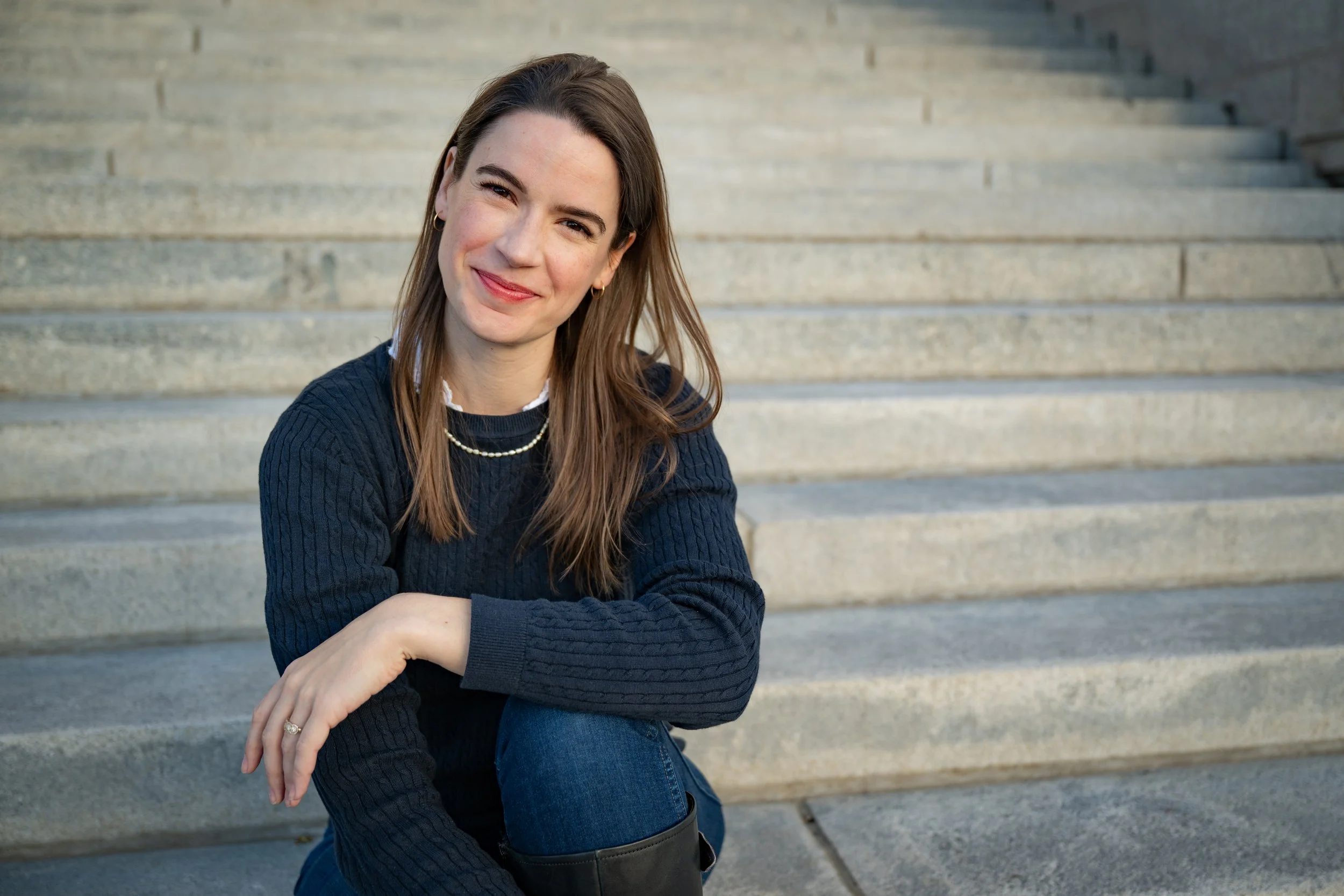
Artist, Elizabeth Bishop Wheatley
Me: What is something surprising about you?
Elizabeth: “It’s probably that I’m actually very introverted, because a lot of what I do is outwardly facing—I teach, I do workshops, and I run a non-profit, and I love being with people for sure, but…I definitely am recharged by time to myself. And I think I worked really hard to like who I am, so I like spending time with me.”
“I have always been a night owl…[Nighttime] has always been my creative time. Even in college, that’s when I’d write my best papers. It’s when I’d have these great creative thoughts. And it’s not that I can’t do work during the day…but when the kids are asleep and the world is asleep, and my phone’s not blowing up, and there’s just time, and it’s quite—it’s easier to get into that state of creating, where it comes with a lot more ease.
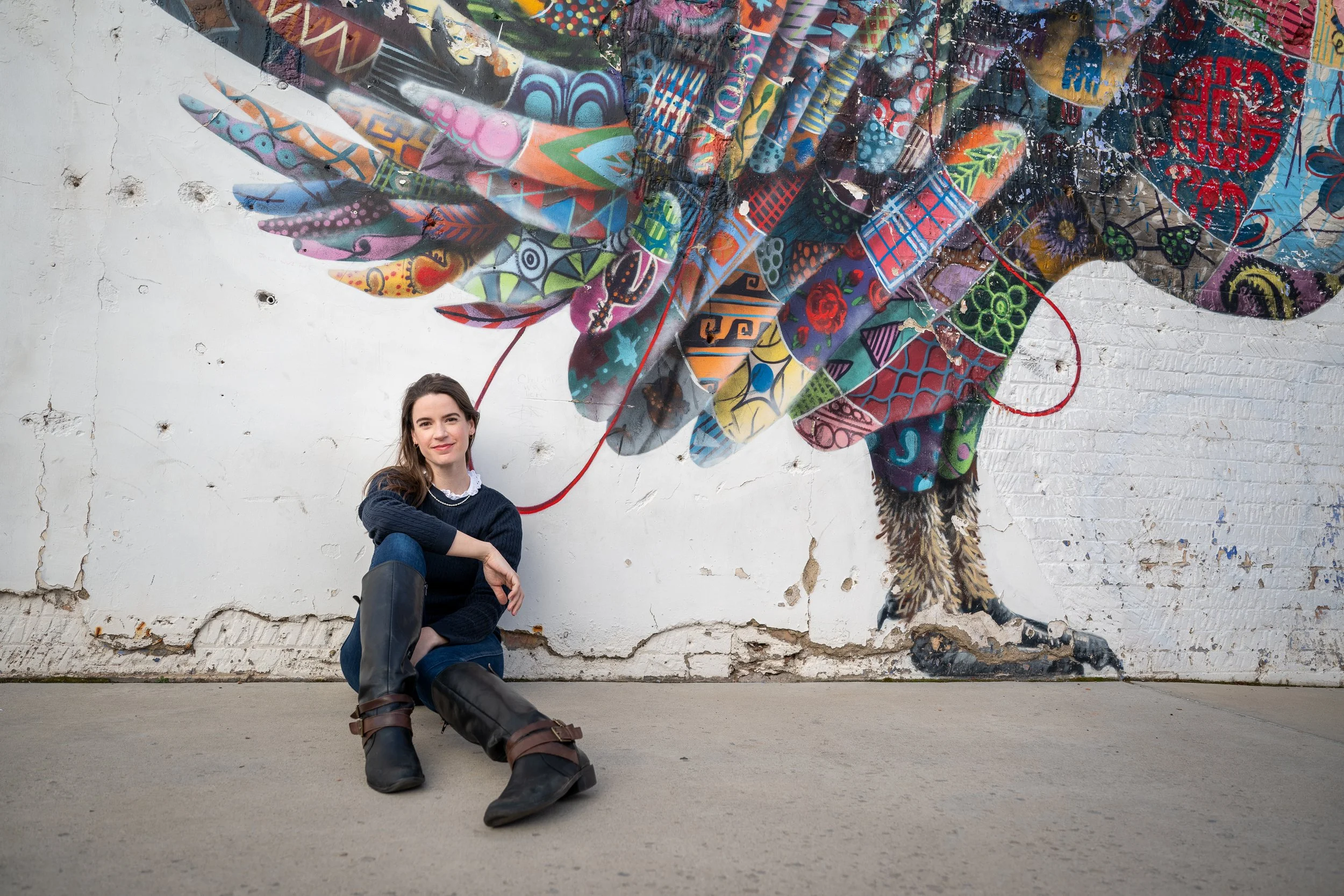
Artist, Elizabeth Bishop Wheatley
Me: What is the most surprising thing that you have learned about the art industry?
Elizabeth: “The most surprising thing about the art industry is how much everyone feels inadequate. I thought that I would overcome this imposter syndrome when I felt ‘professional enough’…or I’ve been doing it for [a certain] amount of time, or I received certain kinds of recognition…and then suddenly those anxieties and those insecurities would be a lot quieter. They do get quieter, but I think really it’s just a matter of getting better at talking over them.”
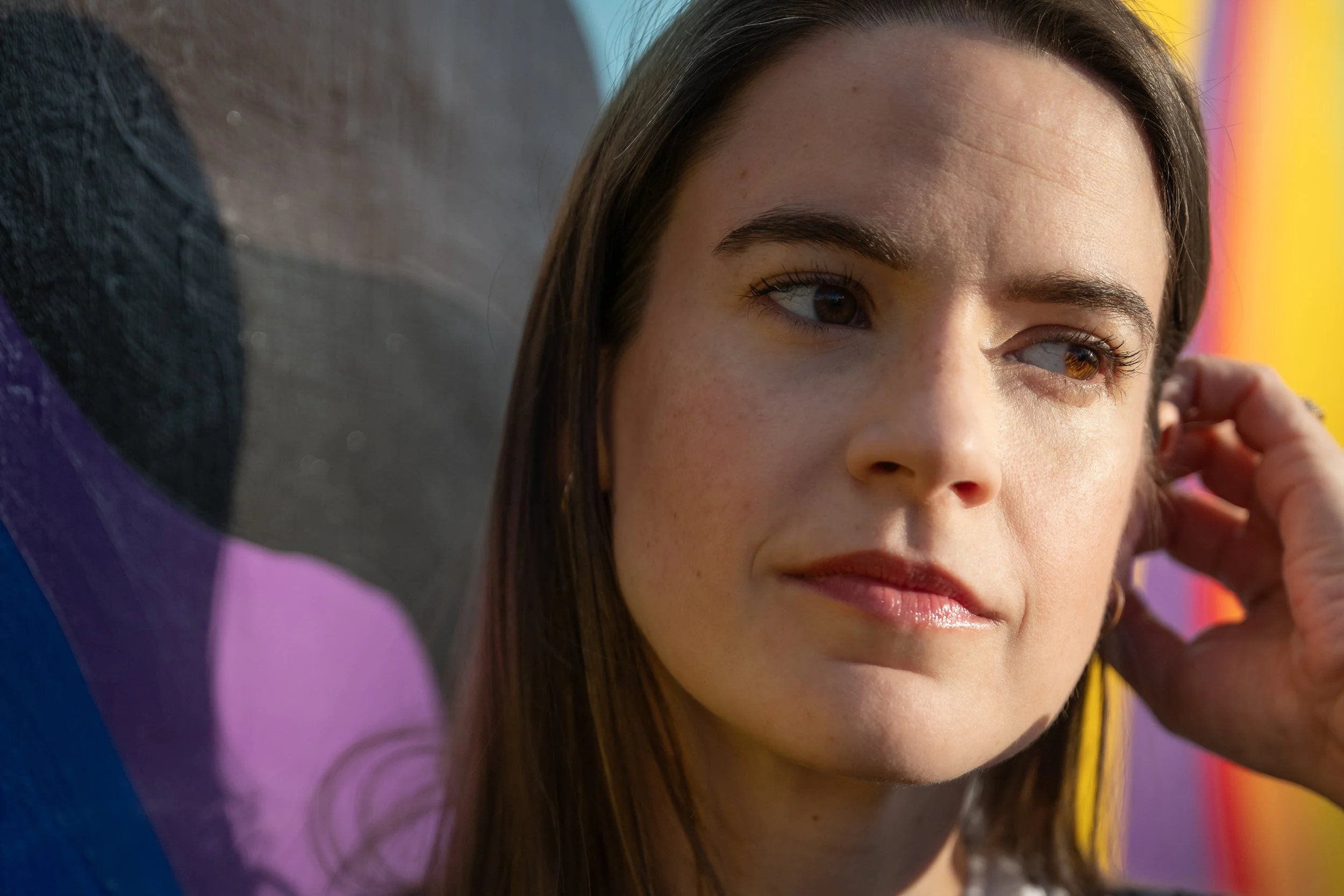
“And when I see people that have made amazing careers out of these things, who are obviously very confident about what they do, and to hear them speak candidly about how insecure they feel about their own art work, or their skill that’s not quite refined in this way…Part of me was a little disappointed in it because I’d held this idea, right? And for [experienced artists] to be so beautifully authentic and honest, it kind of popped this bubble, like wait, you’re saying that I’m never going to get to this spot where this isn’t going to plague me?…But at the same time…it feels like a microcosm of being a creative person…You are so acutely aware of not only what you can do, and make, and produce, and be, but also the distance that is from the ideal…so there is a beautiful amount of honesty and fragility in the [artistic] community.”
Artist, Elizabeth Bishop Wheatley
Me: What would you like your work to represent? What is the meaning or message, if you have one, about the type of work you do?
Elizabeth: “There are a couple of different themes that kind of run through my work for the last couple of years, which is a bit funny because sometimes people will ask me, “Oh, you’re an artist. What kind of work do you do?” And that’s actually really difficult for me to answer because I work across so many different mediums. I do watercolor, but also oil painting, but also digital things…and I also make these mixed media paper quilts—What does that even mean!? I feel like I’m a little bit all over the place because I love so many things. But the thread that ties it all together is that I like exploring themes, and I feel like they’re very interconnected.”
Me: Can you name a theme that you have loved?
Elizabeth: “Yes! So, things that keep coming back are these themes of resilience, especially how that relates to myself as a parent, a mother, a person, a woman. A lot of my work the last couple of years has really explored how that kind of intersects with mental health. I had very difficult bouts of postpartum depression and anxiety with my kids, and trying to figure out How do I find these pieces of myself and make them congruent and whole when it feels like I am just crumbling before my own eyes? So like, themes of wholeness, but also resilience, [and] mending…I use a lot of imagery from quilts, and make cool patterns—historical or otherwise. I love these ideas of small geometric pieces coming together to create a much greater whole. But then also, there is this idea of comfort, things being passed down from generation to generation…like a quilting bee…where community gathers and works together to make this thing that will provide comfort, and safety, and warmth, and covering for people. I think I can take these little bits and pieces, these scraps and stories, and put it all together into this new creation. And I find that very beautiful.”
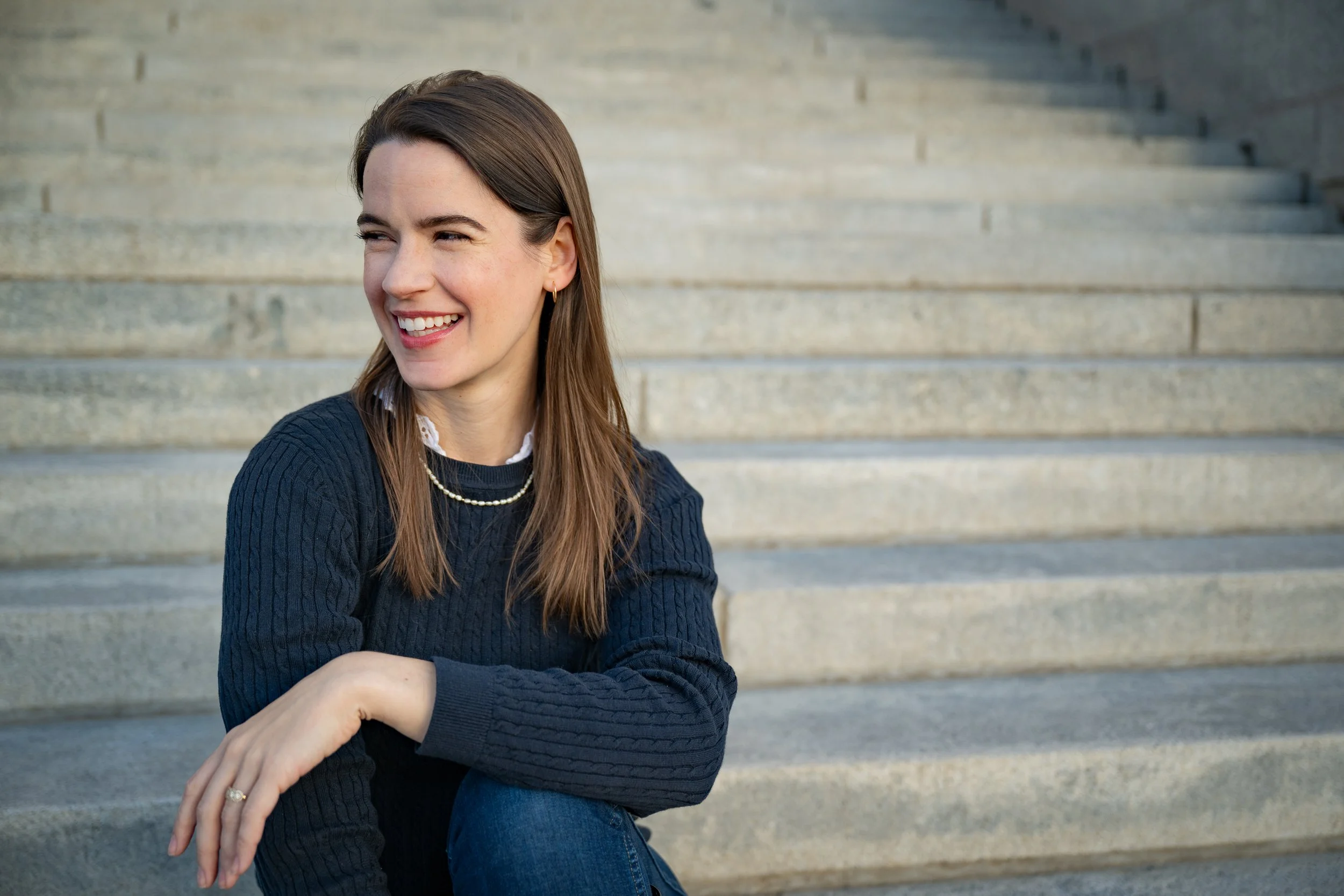
“As a person who often feels very fragmented or has had plenty of times when things have felt broken or in need of repair…that’s not the end. There’s still so much that those pieces can give and [can] be brought back together to create something either new, or whole, or something more beautiful than there was before.”
Artist, Elizabeth Bishop Wheatley
Elizabeth has a wonderful variety of subjects and she told me about one of her favorites.
Elizabeth: “I definitely do a lot with women of faith, like Heavenly Mother. Kintsugi too! I love me something shiney. I love gold. I love what it brings to a piece. But I think there is something really beautiful about this idea of having things that are broken, and then through that repair, that gold lacquer, and the pottery coming back together into wholeness. Then, that brokenness is not something that is like a chapter of your story that is forgotten. It’s actually quite visible, quite celebrated, and it’s something more beautiful because of the journey that it’s taken. It’s the brokenness, but the repairing [too]. There’s process, there’s human love and touch that then brings it back…Those are things that show up [in my art] in different ways.”
Take a look at Elizabeth’s beautiful creations. You can find her @elizabethwheatley.art on Instagram or @elizabethbishopwheatley on Facebook and Pinterest.
If any part of Elizabeth’s story resonated with you, it’s a clear sign that you also have a story worth telling. Learn how to start telling your story at RootsTech beginning tomorrow, March 5, 2026. It’s an annual family history conference—the largest in the world! And it’s not too late to REGISTER HERE, or participate for FREE online.